
no.2 - opening up Lamancha
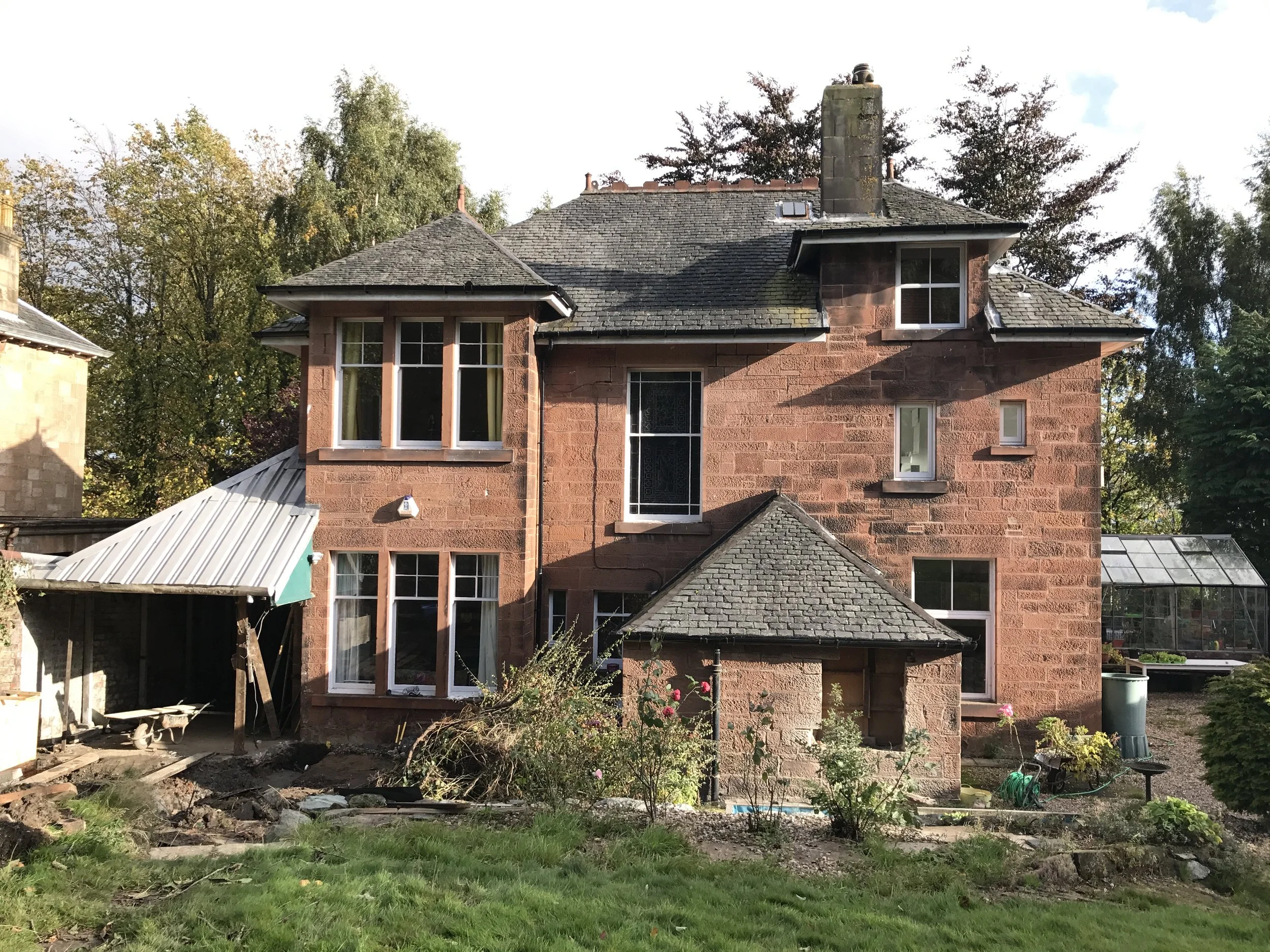
Opening Up Lamancha: Connecting With the Garden
When we first settled into Lamancha, it quickly became clear that the house was not working for the way we lived. Although full of character, the internal layout felt closed and disconnected from the garden around it.
Several copper beech trees dominated the eastern side of the house, forming a strong presence at the front of the property. While beautiful, they cast deep shade in spring and summer when in leaf, significantly affecting light levels inside, particularly in the mornings. At the same time, the existing windows did little to frame the garden — key views to the side and rear were either missed entirely or poorly positioned.
Because the house is Grade B listed, any changes required careful thought and a great deal of patience. Many months were spent working with the Planning Department and Historic Scotland, considering what was possible while respecting the building’s history. Eventually, we arrived at a solution that felt both sensitive and transformative: opening up the kitchen and dining room, and introducing a new opening to the south-facing garden — an area that had, until then, been largely overlooked and underused.
One of the most significant changes came with the conversion of the old 1920s garage. It had been damp, dark, and no longer fit for purpose, and at the rear sat a historic bomb shelter which was demolished as part of the works. In their place, we created a contemporary extension, which went on to function as a rental, helping to support the ongoing work on the house.
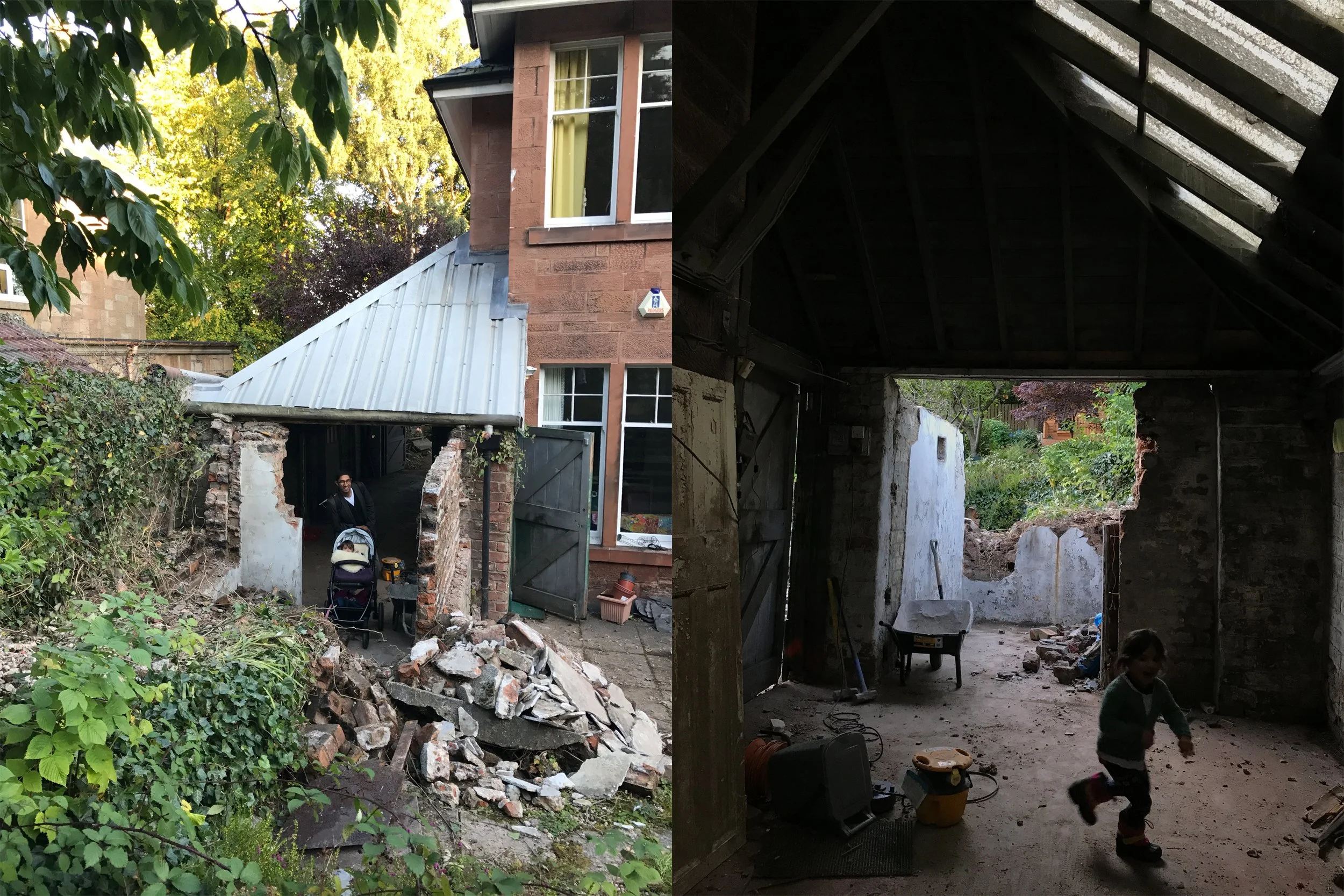
Bomb shelter demolition and opening the garage to the garden
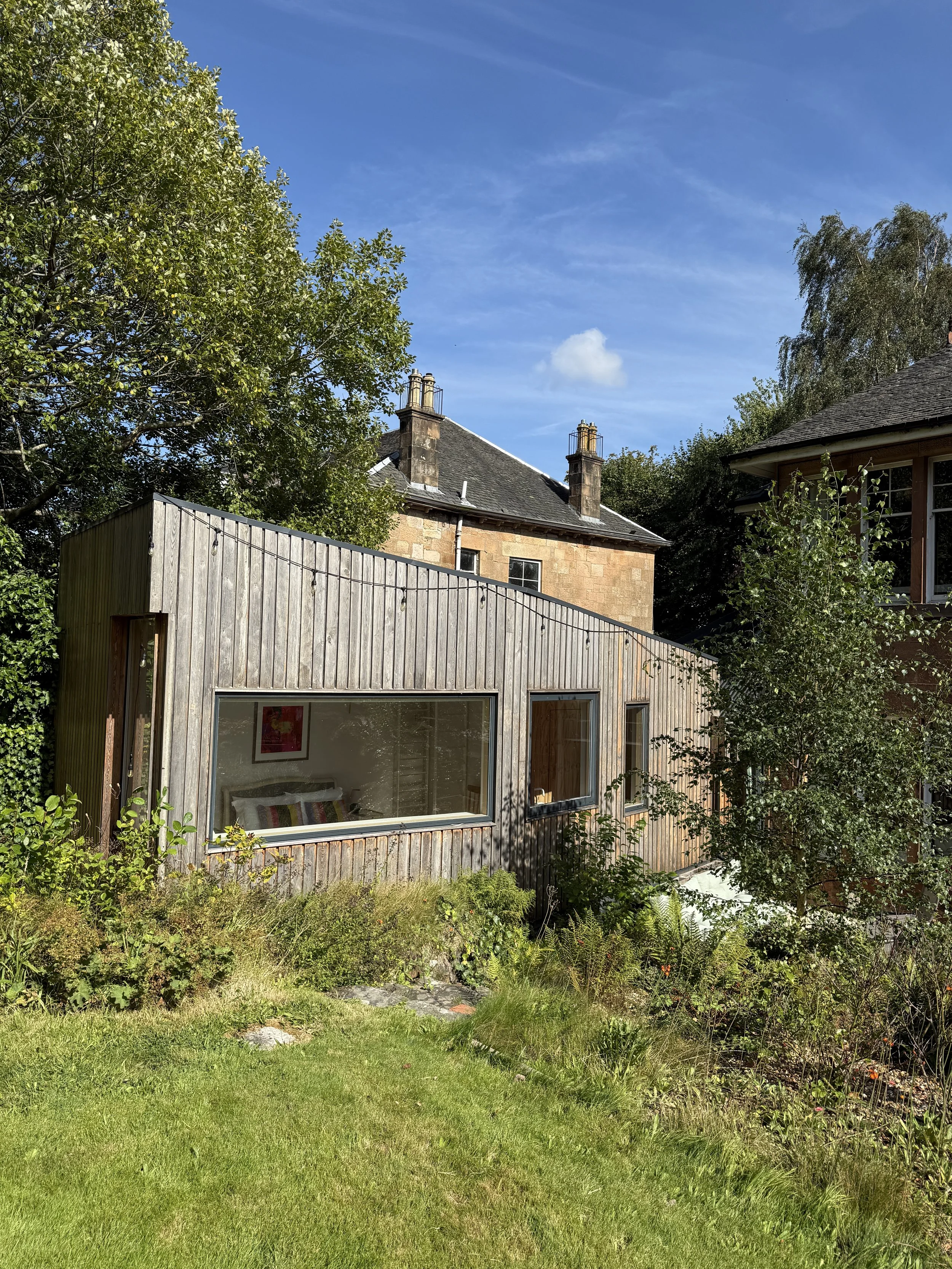
To minimise its impact, the new building was carefully nestled into the existing terraces of the garden, following the natural layout of the land. Inevitably, there were compromises. A couple of young apple trees and a more mature cherry tree were removed, as their roots would have been severely affected by the excavation and the construction of a timber crib wall required to retain the changes in level.
The extension was clad in locally sourced larch, which has since weathered into a soft silvery grey. Large bespoke windows were introduced, carefully positioned to frame long views across the garden and bring natural light deep into the space. Its gently sloping sedum roof offered a constantly changing display through the seasons and, in some small way, helped to replace the garden lost to the footprint of the new building. While its one drawback was that it could only really be appreciated from above, it allowed planting and biodiversity to remain part of the landscape rather than being entirely displaced.
The converted garage was designed to feel as original as possible from the outside. The original doors were retained and repurposed as shutters, while behind them a bespoke glazed entrance now provides views out to the front garden, marrying practicality with the preservation of historic character.
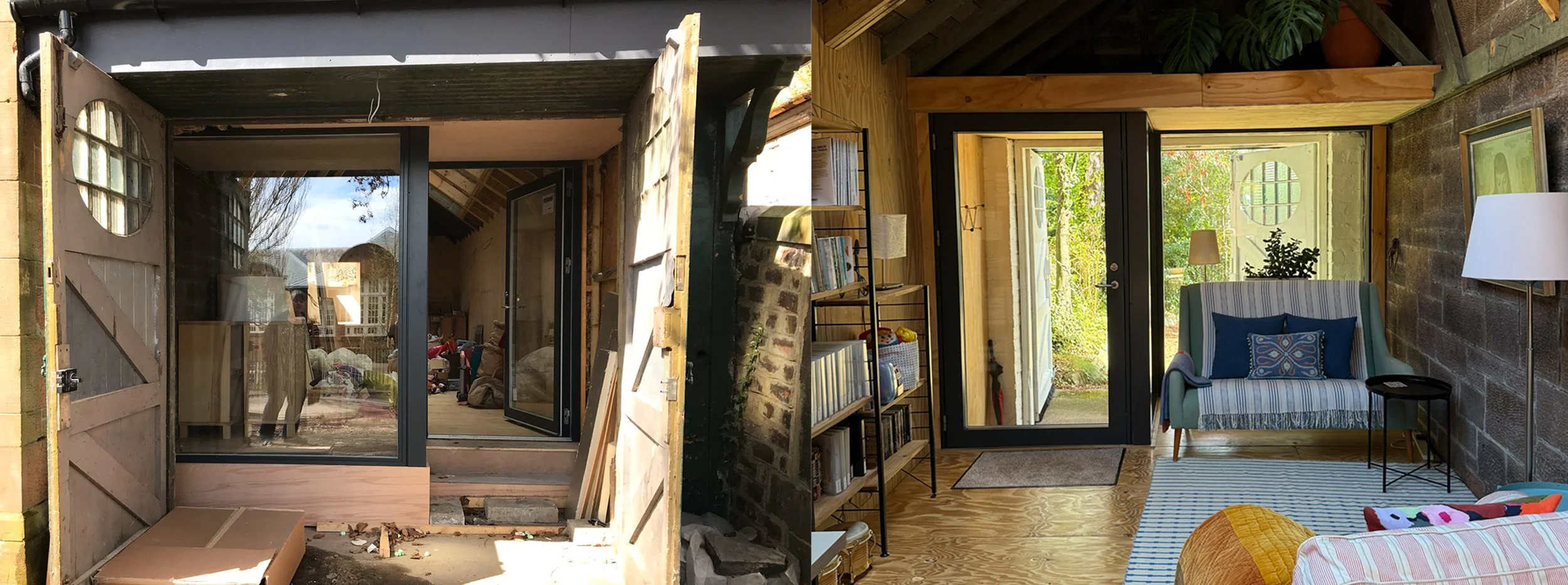
Bespoke glazing behind garage doors
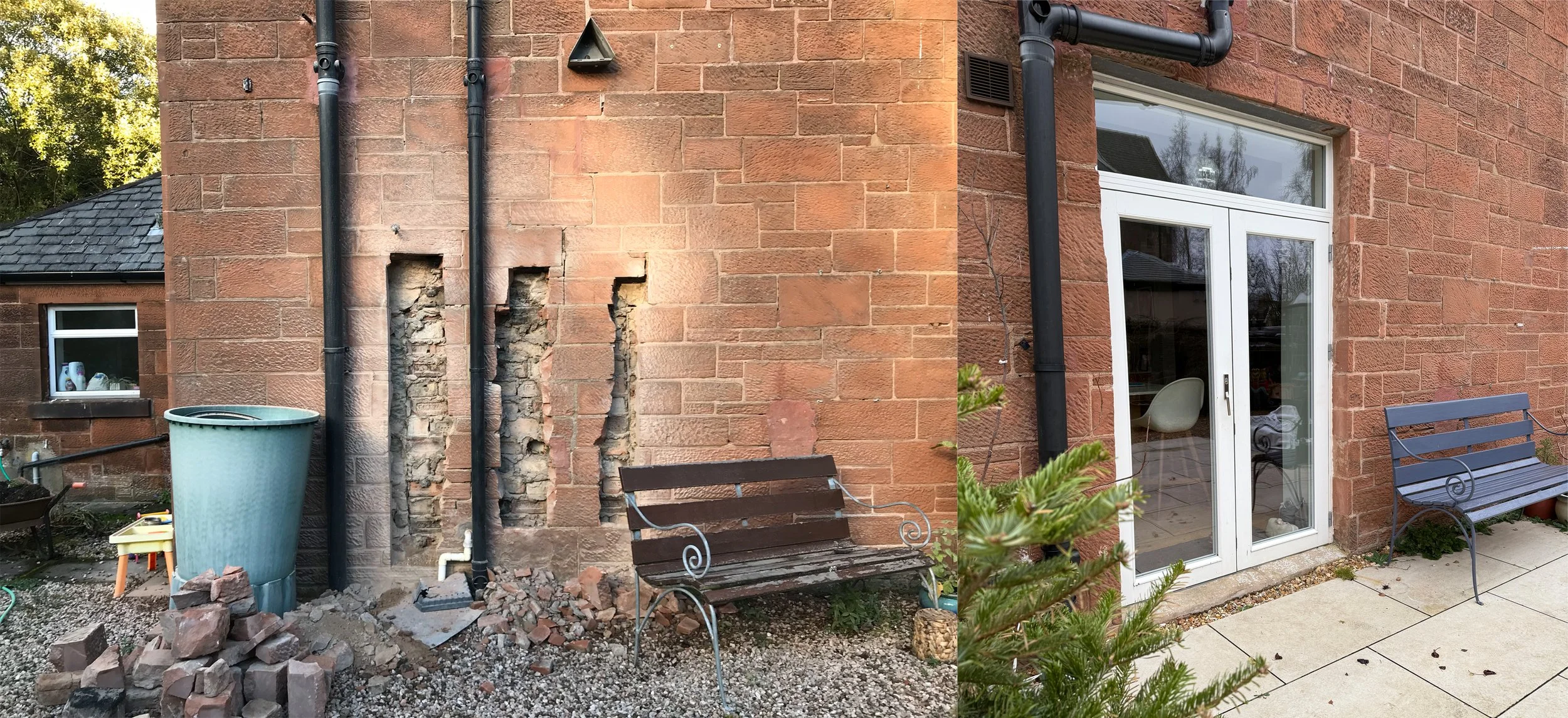
At the rear of the house, the original back door had opened onto a poorly laid concrete slab patio. By relocating the door and rethinking this area, we created a sheltered courtyard that connected the house and the extension. This space caught the evening sun and, as the garden rose several metres towards the rear boundary, enjoyed a gently sunken, enclosed feel that made it a particularly inviting place to sit.
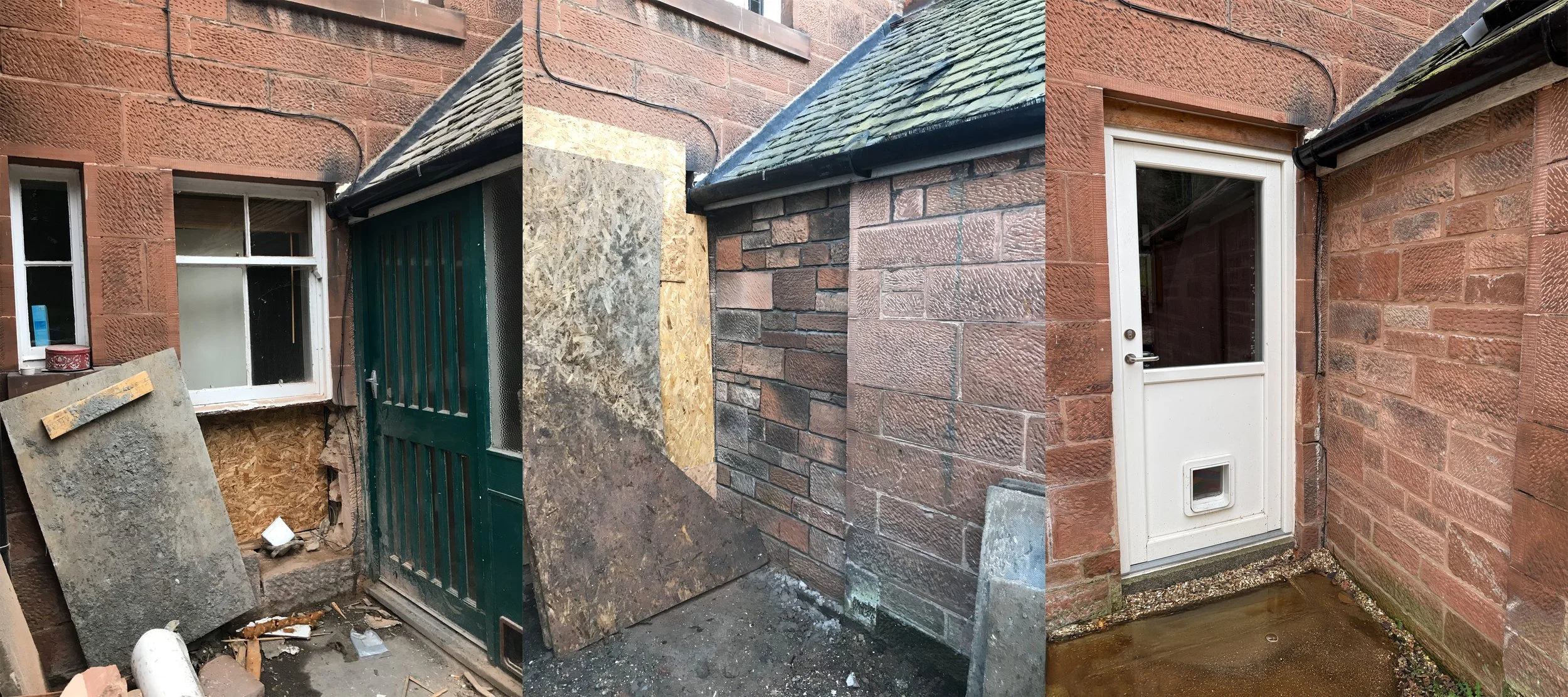
Closing and opening: reusing stone to infill original back door
While there was still much more to be done in the garden, the careful placement of these newly created and adjusted openings proved to be a real turning point. They fundamentally changed how the house related to the garden, improving light, shaping views, and strengthening the connection between inside and out.
More than anything, the process reinforced how important these openings were. They became the key to linking the house with the daily life of the garden and provided a clear starting point for dividing the space into distinct functional and focal areas. These early changes set the framework for what followed, leading naturally into the next stage of the garden’s evolution, the careful introduction of new hard landscaping and the difficult but necessary removal of a number of overpowering mature trees.